Your crossroad · 3 of 5
Courage
When doing what matters takes courage.
For the moments when fear is not telling you to stop. It is simply standing between you and the next brave step.
You may already know what you need to do. The harder part is doing it while you’re still afraid.
Courage rarely arrives as certainty or confidence. More often, it appears when something matters enough that you are willing to move toward it despite the fear, discomfort, or risk that comes with it.
WHAT COURAGE CAN FEEL LIKE
You know where the difficult path is. You just haven’t stepped onto it yet.
You may be waiting to feel braver before having the conversation, making the change, setting the boundary, beginning again, or putting yourself somewhere you can be seen. But courage often works in the opposite order: the action comes first, and confidence follows.
- You know what you want to do, but fear keeps delaying the first step.
- You spend more energy imagining what could go wrong than what might become possible.
- Part of you is waiting for fear to disappear before you act.
THE ANCIENT STORY
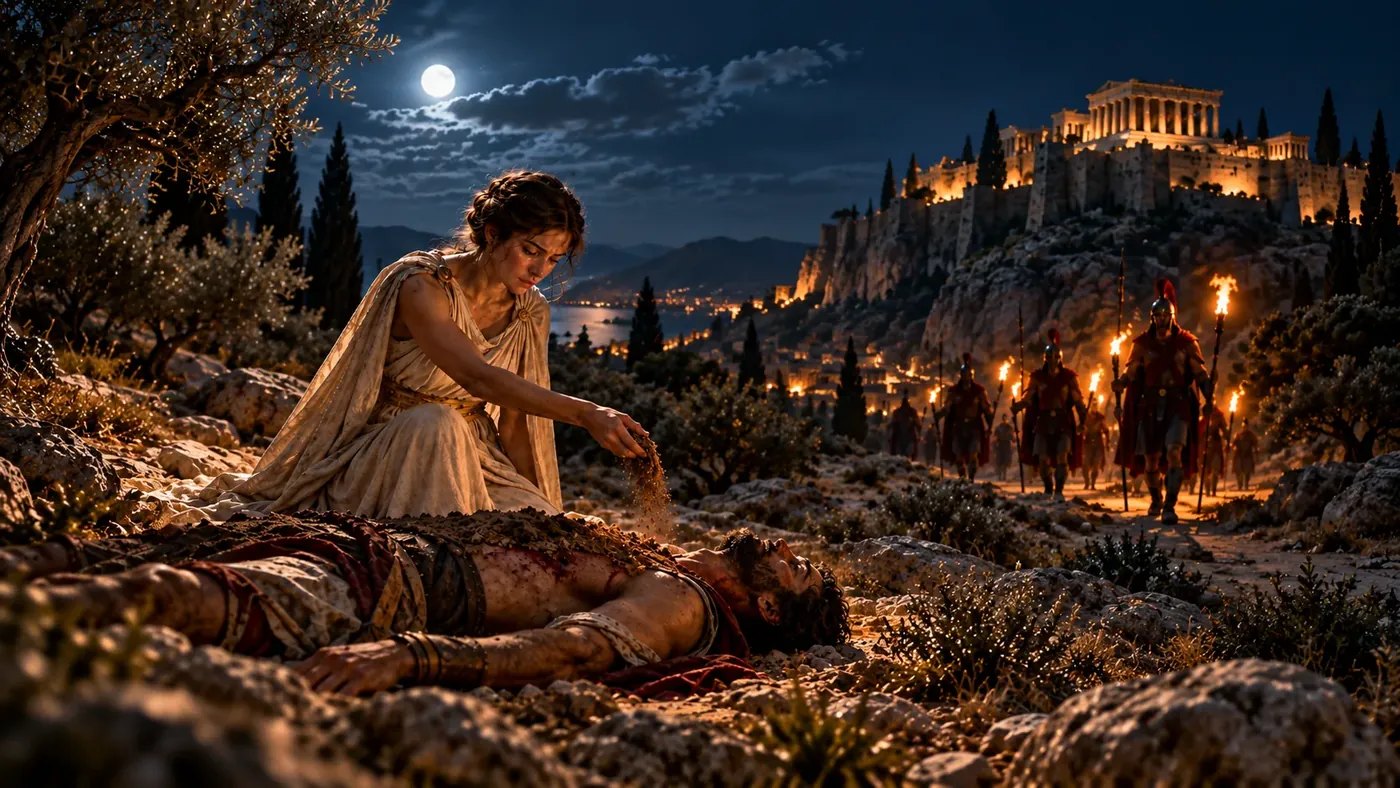
Antigone knew the cost—and acted anyway.
In Sophocles’ Antigone, the young princess is ordered to leave her brother Polynices unburied. To obey would mean abandoning what she believes is right. To defy King Creon could cost her life.
Antigone does not act because she is unafraid. She acts because some convictions matter more to her than the safety of standing still.
WHAT COURAGE ASKS OF YOU
Move before you feel ready.
Fear is not always a warning to stop. Sometimes it is simply the cost of moving toward something that matters. Courage asks you to notice the difference between danger and discomfort—and not let the second masquerade as the first.
You do not need to become fearless before you act. You need enough clarity about what matters to take the next honest step.
- Name what you are afraid of. What are you imagining might happen if you move forward?
- Name what matters more than the fear. What value, need, truth, or possibility makes this worth facing?
- Choose the smallest brave action. What is one step you can take now that moves you toward what matters without requiring you to feel completely ready?
Practice
Do one thing that requires courage.
Fear can make us try to solve the whole future before we act. Instead, give yourself permission to work with what you know now.
Choose one action you have been postponing because it makes you uncomfortable, vulnerable, or afraid. Keep it small enough that you can actually do it.
- What is the action? Name it plainly. No explanation, no justification.
- What fear shows up when you imagine doing it? Write down the consequence you are most worried about.
- What would courage look like for ten minutes? Choose one concrete step you can complete now—a message, a question, a boundary, an application, an appointment, a first attempt.
Courage grows through use. You do not have to feel brave before you begin.
A FINAL THOUGHT
Fear does not get the final vote.
You may still feel uncertain, exposed, or afraid when the moment comes to act. Courage is not the absence of those feelings. It is deciding that they do not get to make the decision for you.
The Crossroads Compass
You’re at a crossroads. Find out which one.
Ten honest questions. No right answers. You’ll leave with the name of your Crossroad and one small step you can take this week.